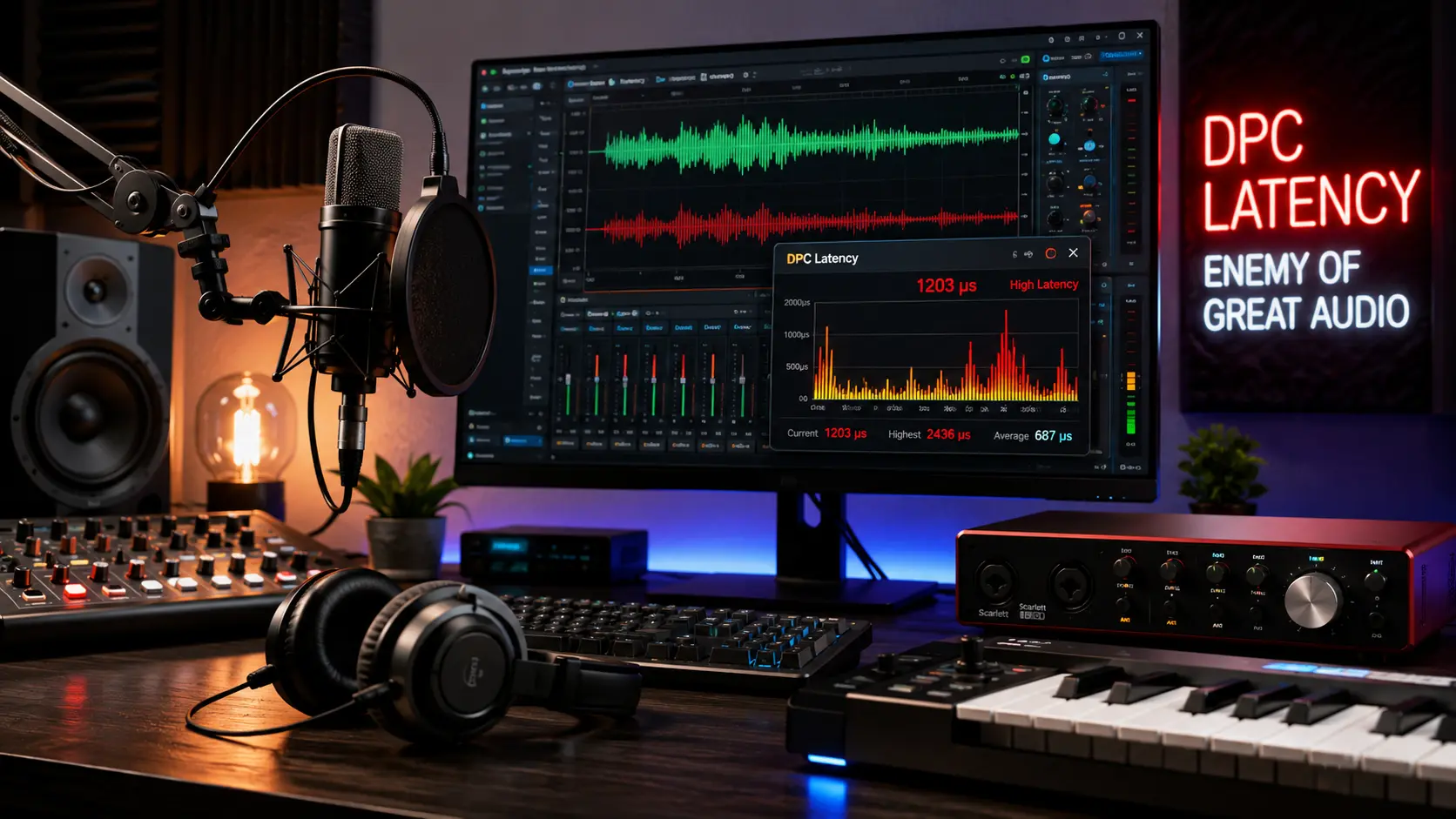
If you're recording audio — vocals, an instrument, a podcast — DPC latency matters more than it does for everyday use, because the stakes are immediate: a glitch during a take means doing it again. Here's what to tune specifically for a recording setup.
Why recording setups are extra sensitive
A DAW typically runs with a much smaller audio buffer than everyday playback, to keep monitoring latency low while you record. That smaller buffer leaves far less room to absorb a DPC spike before it becomes an audible glitch or a dropped sample in the recording itself.
Interface and driver considerations
ASIO drivers (where available) bypass the Windows audio stack and generally handle timing more predictably than generic drivers. If your interface offers both, the dedicated ASIO driver is almost always the better choice for recording specifically.
A tuning checklist for a recording PC
Disable USB selective suspend, set your power plan to High Performance during sessions, close background sync and update services, and run a latency scan while actually recording — not just at idle — to confirm the system stays clean under real load.