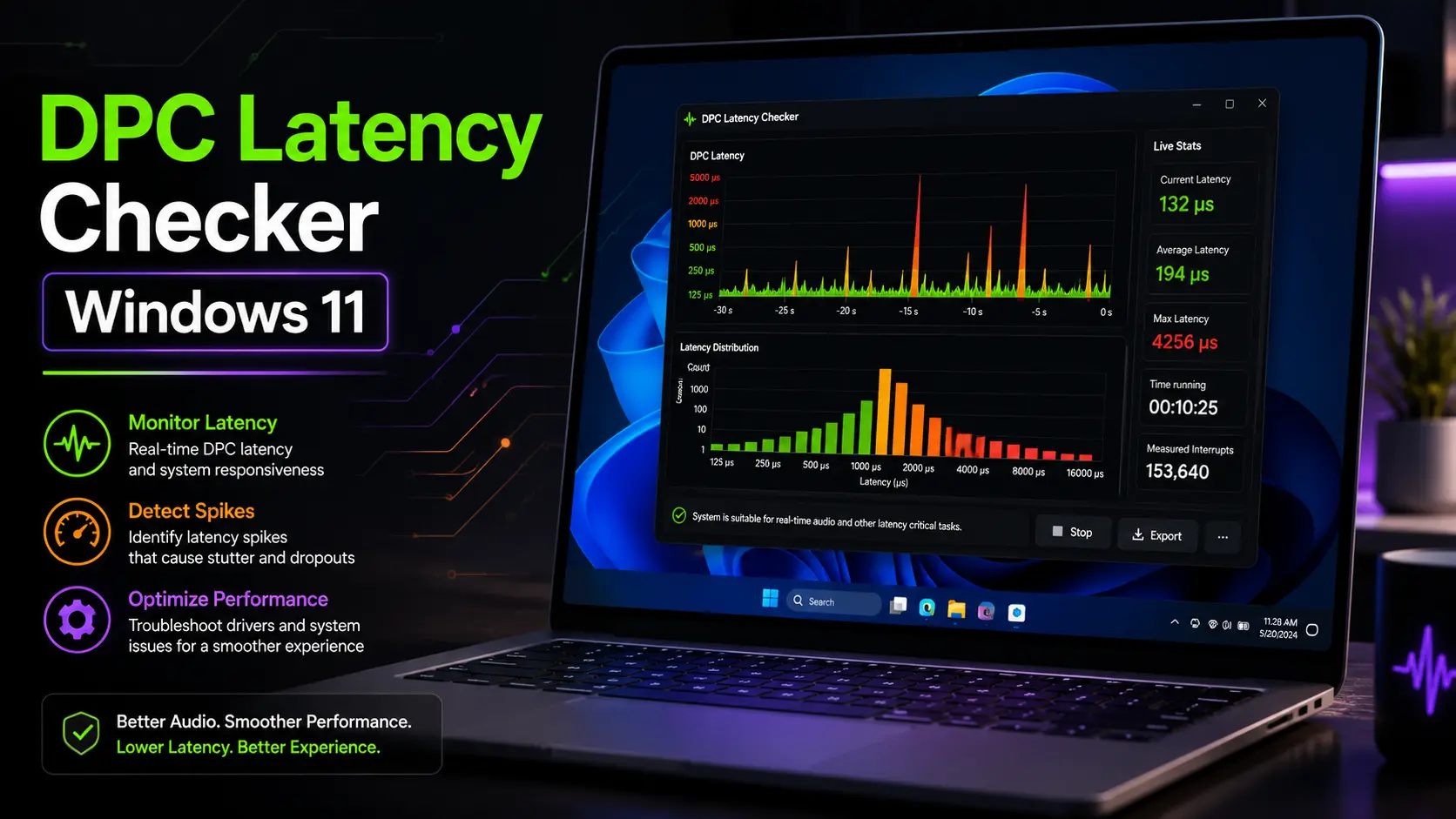
If you've searched for "DPC Latency Checker download Windows 11," you're probably chasing one of three things: stuttering audio, dropped frames, or input that feels a beat behind your actions. DPC (Deferred Procedure Call) latency is the hidden delay between a hardware interrupt and Windows actually handling it — and on Windows 11, a handful of driver and power-management changes make this worth checking even on brand-new PCs.
What DPC latency actually measures
Every time a device — your network card, audio interface, USB controller — needs attention, it raises an interrupt. Windows queues a Deferred Procedure Call to handle it. DPC latency is how long that queued call waits before it actually runs. Under 1ms is excellent, 1-2ms is generally fine, and consistent spikes above 2ms are usually audible or visible as glitches.
Why this shows up specifically on Windows 11
Windows 11's tightened core scheduling and more aggressive power-saving defaults (especially on laptops) can park cores or throttle USB links faster than Windows 10 did, which occasionally turns a borderline driver into a noticeable problem. It's not that Windows 11 is worse — it's that it surfaces latency issues that were already there.
What to do once you've measured it
Run a scan during normal use — gaming, recording, or just browsing with music playing — for at least a few minutes. If one driver consistently shows the highest execution time, that's your starting point: check for a driver update first, and only consider disabling or replacing it if an update doesn't help.