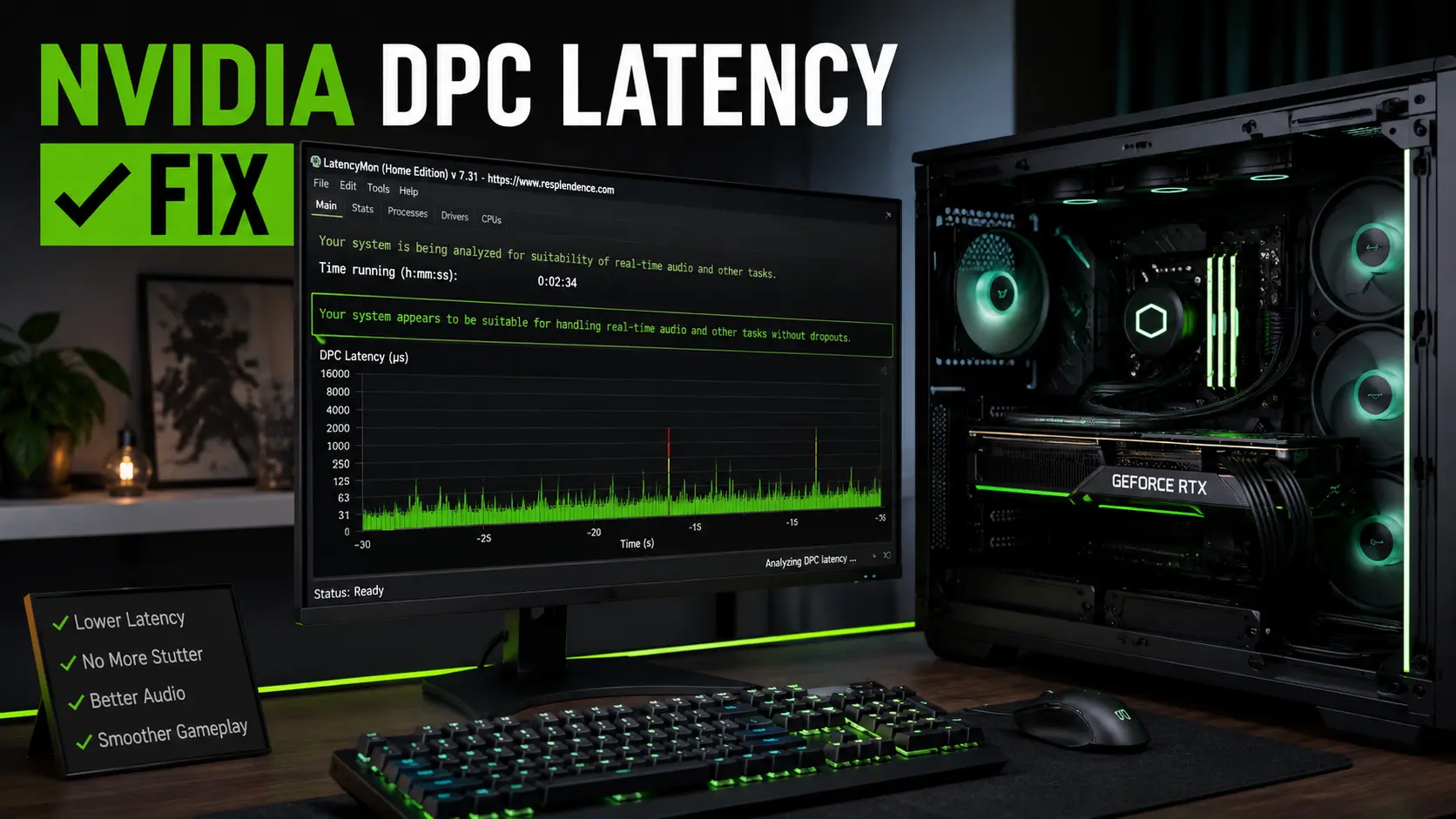
If a latency scan keeps pointing at your graphics driver, you're not imagining it — display drivers are common contributors to DPC latency simply because they handle a high volume of interrupts. Here's what's actually going on and what's worth checking before you assume the worst.
Why a graphics driver shows up in latency reports
Display drivers manage frequent interrupts for frame delivery and power-state changes, especially with multiple monitors or mixed refresh rates. A driver under that kind of load is statistically more likely to occasionally show a higher DPC time than a quiet background driver — that alone doesn't mean it's broken.
Settings worth checking first
Mixed refresh rates across monitors, certain power-management presets, and overlay/recording software running in the background are common triggers. Closing background overlays during a test scan often isolates the issue quickly.
When updating or rolling back actually helps
If the spike appeared right after a driver update, rolling back to the previous version is a reasonable first test. If it's been consistent for a while, a clean reinstall (removing old driver files rather than just installing over them) resolves it more often than people expect.